Every autumn, as the leaves begin to turn and a crispness fills the air, a small corner of Bavaria transforms into the epicenter of a global cultural phenomenon. Oktoberfest in Munich is far more than just a beer festival; it is a profound cultural immersion, a two-week-long celebration of Gemütlichkeit—a uniquely German concept of cozy, genial conviviality. For many, the phrase "not drunk, not home" encapsulates the spirit of the event, but this is a superficial reading of a deeply rooted tradition. To experience Oktoberfest is to step into a living, breathing tapestry of history, community, and joyful abandon, where the clinking of Maßkrug steins is the soundtrack to a much richer human connection.
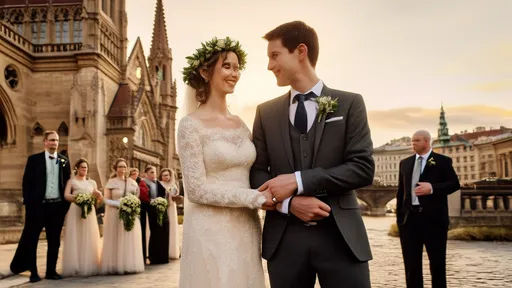
The origins of Oktoberfest are not found in a marketing plan for a brewery, but in the royal stables of a crown prince. On October 12, 1810, the citizens of Munich were invited to celebrate the marriage of Crown Prince Ludwig (later King Ludwig I) to Princess Therese of Saxe-Hildburghausen. The festivities concluded with a horse race held in a field named Theresienwiese ("Theresa's meadow") in honor of the bride, a name locals have since shortened to "Wies'n." The race was such a success that it was decided to repeat it the following year, thus birthing an annual tradition. Over the decades, agricultural shows were added, and by the late 19th century, the large beer tents we recognize today began to appear, erected by the city's burgeoning breweries. What began as a royal wedding party has evolved, surviving wars and economic turmoil, to become a cornerstone of Bavarian identity and the world's largest Volksfest (people's festival).
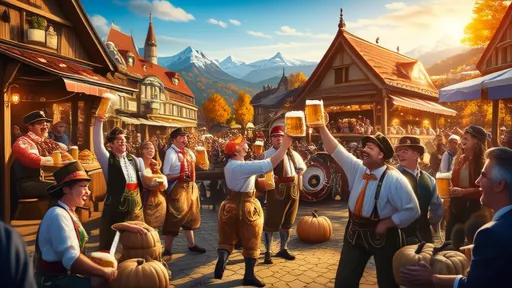
To reduce this history to a simple drinking spree is to miss the entire point. The culture of communal celebration is paramount. The massive beer tents, each seating thousands, are not merely drinking halls but temporary villages, each with its own distinct character, history, and loyal following. The Schottenhamel tent, for instance, is famed for housing the official tapping of the first keg by the Mayor of Munich at noon on the opening Saturday, who must declare "O'zapft is!" ("It is tapped!") before the festival can officially begin. The Hofbräu-Festzelt attracts an international crowd, while the Augustiner-Festhalle is a favorite among Münchners for its traditionally brewed beer served from wooden barrels. Within these tents, strangers become tablemates, and tablemates become friends by the end of the first liter. The experience is built on shared benches, collective singing along to oompah bands playing a mix of traditional folk music and surprising pop classics, and the universal language of a raised toast—"Prost!".
And yes, the beer is central to this experience. It is not merely a beverage but the lifeblood of the celebration, governed by the strict Reinheitsgebot (Beer Purity Law) of 1516, which decrees that only water, barley, and hops can be used in its production. The result is a range of specially brewed festbiers that are stronger, maltier, and more full-bodied than standard brews, typically hovering around 6% ABV. Served exclusively in one-liter Maßkrug steins, each sip is a taste of centuries-old tradition. The act of drinking is not about speed or inebriation for its own sake; it is a participatory ritual. The weight of the glass, the skill of the waitress carrying ten full steins at once, the rhythmic clinking with neighbors—it all forms a ceremonial pace that is surprisingly civilized amidst the apparent chaos. The mantra of "not drunk, not home" is less a command and more a natural, often inevitable, outcome of spending hours engaged in this joyful, communal ritual.
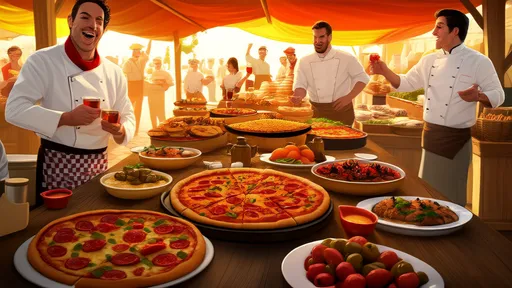
Yet, to focus solely on the beer would be to ignore half the festival. The Wies'n is a sensory overload in the best possible way. The air is a tantalizing mixture of roasting almonds, sizzling bratwurst, and sweet, powdered sugar from mountains of gingerbread hearts (Lebkuchenherzen) and warm, fluffy roasted oxen. Attending Oktoberfest without indulging in a Hendl (roast chicken), a giant Brezn (pretzel), or a portion of Käsespätzle (cheesy egg noodles) is to have only half the experience. The carnival atmosphere extends beyond the tents with a sprawling funfair featuring historic carousels, thrilling roller coasters, and games of skill. The vibrant colors of traditional Tracht—the men's Lederhosen and women's Dirndls—add to the visual spectacle, a proud display of cultural attire that visitors from around the world enthusiastically adopt, further dissolving the lines between tourist and local.
Beneath the surface of this immense party lies a complex and efficient organization that makes it all possible. It is a massive undertaking run by a combination of Munich city officials and private families, some of whom have been operating their tents and attractions for generations. There is a deeply ingrained culture of responsibility. Security is omnipresent but discreet, and the serving staff, while incredibly busy, are trained to cut off anyone who has overindulged. The "not drunk, not home" idea is balanced by an unspoken code of conduct and mutual respect. The celebration is intense but, for the vast majority, it is safe and orderly. This hidden structure is what allows the carefree atmosphere to flourish; it is organized chaos at its finest.
In conclusion, the true cultural experience of Oktoberfest transcends the simple consumption of alcohol. The phrase "not drunk, not home" is a playful, hyperbolic testament to the festival's overwhelming spirit of abandonment and joy, but it is not the definition. The real magic of the Wies'n is found in the connections forged between people from all walks of life, united on long wooden benches under the canvas of a giant tent. It is in the thunderous applause after a rousing folk song, the shared struggle of a first-time visitor trying to master the one-liter stein, and the collective cheer that erupts when the sun breaks through the tent opening. It is a temporary world where everyday worries are checked at the door and the only priority is to be present in the moment, surrounded by thousands of your newest friends. You may indeed leave feeling the effects of the strong festbier, but you will carry home so much more: the memory of a profound cultural immersion, a feeling of global community, and the resonant echo of a heartfelt "Prost!" that symbolizes the very best of human celebration.
By /Sep 1, 2025
By /Sep 1, 2025
By /Sep 1, 2025
By /Sep 1, 2025
By /Sep 1, 2025

By /Sep 1, 2025

By /Sep 1, 2025
By /Sep 1, 2025
By /Sep 1, 2025
By /Sep 1, 2025
By /Sep 1, 2025

By /Sep 1, 2025
By /Sep 1, 2025
By /Sep 1, 2025
By /Sep 1, 2025
By /Sep 1, 2025
By /Sep 1, 2025
By /Sep 1, 2025
By /Sep 1, 2025
By /Sep 1, 2025