For the discerning museum enthusiast, few destinations rival the cultural triumvirate of London, Paris, and Florence. Each city offers a distinct and profound journey through art, history, and human achievement, forming a grand tour that feels less like a simple vacation and more like a pilgrimage. The sheer density of world-class institutions in these cities can be overwhelming, yet utterly intoxicating for those who find solace and inspiration within hallowed halls of marble and masterpieces. This is not a checklist to be completed, but a feast to be savored, a deep and rewarding immersion into the very soul of Western culture.
London’s museum landscape is a magnificent beast, both vast and surprisingly accessible. The journey often begins, as it should, at the British Museum. Stepping into its grand courtyard, enclosed by Norman Foster’s spectacular glass and steel roof, is an experience in itself. The museum’s collection is a staggering testament to centuries of exploration and, controversially, collection. Here, you can stand before the Rosetta Stone, your nose almost pressed against the glass that separates you from the key that unlocked Egyptian hieroglyphics. The Parthenon Marbles, housed in their purpose-built gallery, tell a story of ancient Greek artistry and modern diplomatic tension simultaneously. The atmosphere is one of hushed awe, punctuated by the murmurs of visitors from every corner of the globe.
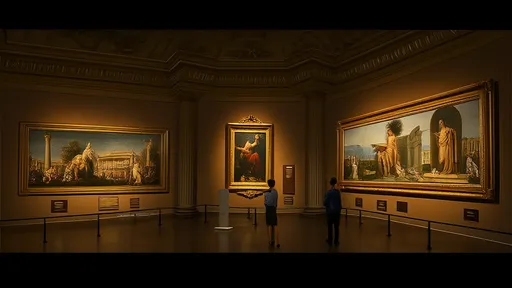
A short walk away, the National Gallery presides over Trafalgar Square with an air of dignified authority. Inside, the chronological hang allows for a walk through the history of Western European painting. You can trace the evolution from the gold leaf and rigid piety of medieval altarpieces, through the luminous clarity of the Renaissance, and into the dramatic light and shadow of the Baroque. It is here that you can have a quiet moment with Van Gogh’s Sunflowers, feeling the thick, frantic impasto of the paint, or get lost in the delicate beauty of a Vermeer. Unlike the encyclopedic scope of the British Museum, the National Gallery offers a deep, focused dive into pure painting.
For a change of pace, the Tate Modern, housed in a former power station on the South Bank, provides a jolt of contemporary energy. The vast Turbine Hall, which hosts monumental annual installations, sets the stage for a collection that challenges and provokes. The journey through modernism—from the fractured visions of the Cubists to the bold abstractions of Pollock and Rothko—is powerful and often visceral. London’s strength lies in this incredible diversity, offering a millennia-spanning narrative of human creativity all within a few square miles, and remarkably, with free admission to its national collections.
Crossing the Channel, Paris offers a different kind of allure. It is a city where art and life are seamlessly intertwined, and its museums are palaces dedicated to this philosophy. The Louvre needs no introduction. It is the titan, the benchmark against which all other museums are measured. Navigating its crowded corridors can be a tactical endeavor, but the rewards are unparalleled. Beyond the inevitable, and deserved, crowd around the Mona Lisa, lie countless treasures. To stand in the shadow of the Winged Victory of Samothrace, dramatically perched at the head of the Daru staircase, is to feel a genuine thrill. To wander the hushed rooms of French Romantic painting, or to get lost in the extensive Egyptian antiquities collection, is to understand the scale of human ambition. The Louvre is not a museum you visit; it is one you surrender to.
If the Louvre represents the grandeur of the ancien régime, the Musée d’Orsay embodies the revolutionary spirit of the 19th and early 20th centuries. Housed in a breathtakingly beautiful former railway station, its collection is a who’s who of Impressionist and Post-Impressionist masters. The natural light flooding through the giant clock faces illuminates the paintings in a way that feels divinely inspired. Here, you can spend an hour admiring the dreamy dance rehearsals of Degas, the vibrant Parisian life captured by Renoir, and the starry, swirling nights of Van Gogh. The atmosphere is one of pure joy and light, a stark and welcome contrast to the sometimes overwhelming density of the Louvre.
For the final act of the Parisian trilogy, the Centre Pompidou offers a bold vision of the future, both in its inside-out architecture and its world-class collection of modern and contemporary art. It completes the story, picking up where the Orsay leaves off and charging forward into the present day. Paris thus presents a near-complete chronological arc of art history, each chapter housed in a building that is itself a masterpiece, from the classical palace of the Louvre to the high-tech exoskeleton of the Pompidou.
Then, there is Florence. The cradle of the Renaissance is a different proposition altogether. Where London is vast and Paris is grand, Florence is intimate and overwhelming in its concentration of genius. The entire city center is a UNESCO World Heritage site, an open-air museum where every corner reveals a fragment of history. The Uffizi Gallery is the undisputed heart of this experience. Walking through its corridors lined with ancient sculptures, you feel the presence of the Medici family who amassed this incredible collection. The rooms unfold like a textbook on the birth of the Renaissance. The moment you turn a corner and come face-to-face with Botticelli’s The Birth of Venus is a moment you will never forget. The painting radiates a serene, ethereal beauty that transcends its fame. Similarly, the delicate grace of Lippi’s Madonnas and the groundbreaking use of perspective in works by Paolo Uccello mark a definitive break from the medieval world and the dawn of a new era of humanism.
A five-minute walk from the Uffizi, across the iconic Ponte Vecchio, leads to the Pitti Palace. This vast Renaissance palace houses several museums, but its crown jewel is the Palatine Gallery. The experience here is less about art historical chronology and more about sheer, opulent beauty. Paintings are hung frame-to-frame in the lavish baroque style, covering the walls of rooms that are artworks in themselves, with frescoed ceilings and priceless furniture. It feels like walking into the private collection of a supremely powerful and tasteful ruler, which is exactly what it was. Here, you will find a stunning collection of Raphaels, Titians, and Rubens, all displayed in a context of breathtaking luxury.
No trip to Florence is complete without gazing upon Michelangelo’s David at the Galleria dell’Accademia. While the Accademia’s collection is small, its centerpiece is arguably the most famous sculpture in the world. Seeing David in person is to understand the meaning of perfection in marble. The scale, the detail in the tensed hands and focused gaze, the sheer audacity of carving such a figure from a single block of stone—it is a humbling and inspiring encounter that encapsulates the spirit of the Renaissance: confidence, beauty, and unparalleled technical skill.
Ultimately, a journey through these three cities is a journey through the very narrative of Western art and civilization. London presents a global, collected history. Paris showcases the evolution of art within a framework of national pride and revolutionary beauty. Florence offers the intimate, ground-zero experience of the Renaissance. Each city complements the others, creating a rich, multifaceted understanding of our cultural heritage. For the museum lover, this trilogy is not just a feast; it is the ultimate banquet, an unforgettable immersion that will leave you forever changed, with memories of standing in the presence of greatness that will last a lifetime.

By /Sep 1, 2025
By /Sep 1, 2025

By /Sep 1, 2025

By /Sep 1, 2025
By /Sep 1, 2025

By /Sep 1, 2025

By /Sep 1, 2025
By /Sep 1, 2025
By /Sep 1, 2025
By /Sep 1, 2025

By /Sep 1, 2025

By /Sep 1, 2025
By /Sep 1, 2025
By /Sep 1, 2025
By /Sep 1, 2025
By /Sep 1, 2025

By /Sep 1, 2025
By /Sep 1, 2025
By /Sep 1, 2025
By /Sep 1, 2025