Nestled on the banks of the Danube, Budapest is a city where history steams from the ground itself. Here, culture isn’t just found in museums or concert halls—it soaks into you, literally, in the city’s legendary thermal baths. To step into one of Budapest’s bathhouses is to immerse yourself in a living, breathing piece of Hungarian heritage, where the waters have been a source of healing, community, and ritual for centuries, from the Romans to the Ottomans to the cosmopolitan city of today.
The story of Budapest’s baths begins long before the city was even called by that name. The Romans, ever in pursuit of relaxation and recuperation, were the first to capitalise on the thermal springs bubbling beneath the ground of what is now Óbuda. They established Aquincum, a significant settlement complete with elaborate bath complexes, understanding even then the profound connection between geothermal water and well-being. Centuries later, during the 150 years of Ottoman rule in the 16th and 17th centuries, the bathing culture was profoundly transformed. The Ottomans were masters of the hamam, the communal bath, and they constructed stunning structures that still form the heart of some of Budapest’s most famous baths today. The grand domes, intricate star-shaped skylights, and octagonal pools of the Király Baths and the Rudas Baths are direct architectural legacies of this era, offering a tangible, steamy portal to the past.
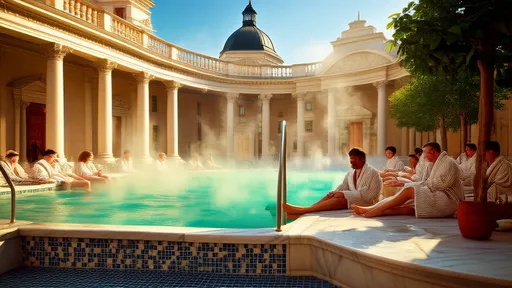
To visit the Széchenyi Thermal Bath is to experience bathing on a monumental, palatial scale. Located in the City Park, its stunning yellow Neo-Baroque palace seems more fit for a Habsburg emperor than for bathers. Yet, inside its courtyards, a spectacular scene unfolds. Dozens of people, from locals to tourists, sit chest-deep in the warm, mineral-rich waters, chessboards floating between them as they engage in intense matches that seem to last for hours. The steam rises in the cool air, creating a hazy, dreamlike atmosphere. The water, sourced from two thermal springs, is said to alleviate joint inflammation and degenerative joint diseases. But more than its medicinal properties, Széchenyi is a social hub, a sprawling aquatic town square where the city comes to connect, relax, and simply be.
For a more intimate and historically charged experience, the Gellért Baths offer unparalleled Art Nouveau splendour. Housed within the famous Gellért Hotel, the interior is a breathtaking spectacle of stained glass, mosaic tiles, marble columns, and statues overlooking brilliant blue pools. It feels decidedly luxurious and theatrical, a reminder of the golden age of Budapest in the early 20th century. Meanwhile, on the Buda side of the river, the Rudas Baths maintain an aura of mysterious tradition. Its centrepiece is a stunning 16th-century Ottoman dome supported by eight columns, under which a dark, thermal pool glows. For most of the week, Rudas is a mixed-bathing environment, but it clings to tradition by dedicating certain days to men or women only, a practice that harks back to its Ottoman origins.
The culture of the baths is governed by a unique, unspoken etiquette. It is a world of flip-flops, rented cabins, and the distinct smell of sulphur, a scent that locals proudly call the “smell of health.” First-timers might be surprised by the brisk efficiency of it all: receiving a numbered token, finding your cabin, and navigating the often labyrinthine corridors between indoor thermal pools, steam rooms, and outdoor pools of varying temperatures. It’s a ritual the Hungarians have perfected. The baths are not for hurried dips; they are for soaking, for sitting, for allowing the heat to seep into your muscles and the slow passage of time to clear your mind. Conversation is hushed, the atmosphere is one of quiet contemplation mixed with the gentle lapping of water.
Beyond the well-trodden path of the famous institutions lies a world of smaller, more local bathhouses. The Lukács Baths, also on the Buda side, have a more understated, clinical feel, long favoured by Budapest residents for actual medical treatments. Its courtyards are filled with plaques donated by grateful patrons who credit the waters with curing their ailments. Then there’s the Veli Bej Bath, a recently restored 16th-century Ottoman gem that had lain hidden for decades. Its rediscovery and renovation have given bathers a chance to experience an authentic, smaller-scale Turkish bath in its original form, almost untouched by time.
The thermal water is the undeniable star of the show, and its chemistry is as rich as its history. Budapest sits on a geological fault line, which forces over 100 thermal springs to the surface, delivering millions of litres of hot water daily. The water is rich with minerals like sulphate, calcium, magnesium, bicarbonate, and a significant amount of fluoride. Each bath has a slightly different chemical composition, leading locals to swear by specific baths for specific conditions—one for rheumatism, another for respiratory issues, another for sheer relaxation. This isn’t just superstition; balneology, the science of healing through bathing, is a respected and practised field in Hungary.
In contemporary Budapest, the bath culture is not a relic; it is a vibrant and evolving part of city life. The historic baths have cleverly adapted to modern tastes. Rudas now features a stunning rooftop jacuzzi with panoramic views of the Danube and the Parliament building, perfect for evening soaking with a cocktail in hand. Széchenyi hosts infamous weekend “Sparties” (Spa Parties), where the pools transform into a giant, neon-lit dance club with electronic music. While purists might shudder, these events introduce a whole new generation to the bathhouses, ensuring their survival and relevance. The baths are also cultural venues, hosting art installations, concerts, and wellness festivals throughout the year, seamlessly blending the ancient with the avant-garde.
Ultimately, to bathe in Budapest is to participate in a centuries-old ritual that defines the city’s soul. It is a democratic experience, shared by all: elderly locals following a strict daily regimen, young friends gossiping in the water, and travellers seeking a moment of authentic connection. The baths are a silent witness to the city’s tumultuous history—they have survived empires, wars, and revolutions, always providing a place of sanctuary and healing. They are not merely swimming pools; they are living museums, social clubs, hospitals, and temples of relaxation all rolled into one. You don’t just visit a thermal bath in Budapest; you soak in its culture, its history, and its very essence, emerging warmed, rejuvenated, and deeply connected to the heart of Hungary.

By /Sep 1, 2025
By /Sep 1, 2025
By /Sep 1, 2025

By /Sep 1, 2025
By /Sep 1, 2025

By /Sep 1, 2025

By /Sep 1, 2025
By /Sep 1, 2025

By /Sep 1, 2025
By /Sep 1, 2025

By /Sep 1, 2025

By /Sep 1, 2025
By /Sep 1, 2025
By /Sep 1, 2025
By /Sep 1, 2025
By /Sep 1, 2025

By /Sep 1, 2025
By /Sep 1, 2025
By /Sep 1, 2025
By /Sep 1, 2025