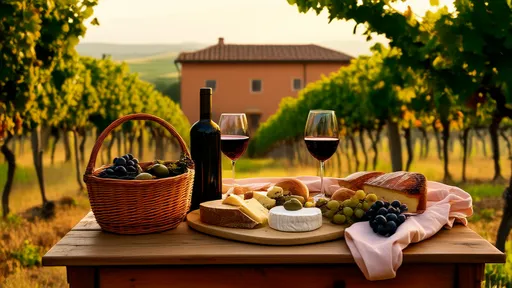
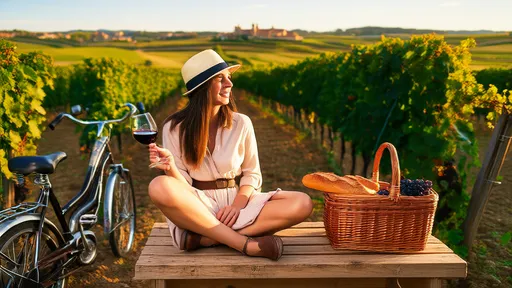
There is a particular quality to the light in Tuscany. It slants across the rolling hills in a way that seems to gild everything it touches—the ancient stone farmhouses, the rows of silver-green olive trees, the meticulously aligned vines heavy with fruit. This light feels different; it feels like time itself has slowed down, inviting you to do the same. To truly understand the Italian way of life, one must venture beyond the museums and piazzas of its famed cities and into this heartland. Here, the philosophy of la dolce vita is not an abstract concept but a daily practice, and its most profound lessons are taught through its two liquid treasures: olive oil and wine.
The journey into this world often begins with the olive tree, a gnarled and resilient symbol of peace, prosperity, and longevity. To walk through an olive grove in late autumn is to participate in a ritual that has changed little for millennia. The air is crisp, and the sound of the harvest is a gentle percussion of nets being laid and olives raining down upon them. This is not the work of large, impersonal machines but of families and communities. There is laughter, shared food during breaks, and a deep, respectful connection to the land. Each olive is handled with care, for it is understood that the quality of the oil is born in the orchard; the mill merely coaxes it out.
The transformation at the frantoio, the mill, is where the magic becomes tangible. The scent is overwhelming—a pungent, grassy, peppery aroma that fills the lungs and announces the arrival of the new oil. The olio nuovo is a vibrant, cloudy green elixir, almost alive in the bottle. Tasting it is a revelation. This is not the bland, filtered oil found on supermarket shelves. It is fierce and fruity, with a sharp, peppery kick at the back of the throat that makes you cough—a sign of high polyphenol content and freshness that connoisseurs cherish. It is the taste of the sun, the soil, and the very essence of the olive itself.
This oil is the undisputed king of the Tuscan table. It is never used for cooking in these early stages but is instead lavished generously over everything. A slice of unsalted, toasted bread becomes fettunta when rubbed with garlic and drowned in this liquid gold. It is drizzled over steaming bowls of ribollita, a hearty vegetable and bread soup, and over simple plates of white beans and oregano. It finishes a steak from the native Chianina cattle, enhances the flavour of a fresh tomato, and even finds its way over a scoop of vanilla gelato for a surprising and delightful dessert. It is, in every way, the flavour of life itself.
As the olive harvest concludes, the focus of the land shifts subtly to the vineyards. If the olive oil is the vibrant, life-giving blood of Tuscany, then the wine is its soulful, contemplative heart. The grape most synonymous with this region is Sangiovese, a variety that seems to possess the very character of the land in its DNA. Its name is often thought to derive from sanguis Jovis, the blood of Jove, and tasting a great one does feel like a mythical experience. It is not a wine of overpowering fruit or brute strength; it is a wine of earth and cherry, of leather and thyme, of acidity and fine, dusty tannins. It is a wine that speaks of place above all else.
This concept of terroir—the complete natural environment in which the wine is produced—is paramount. The poor, rocky soils, the altitude of the vineyard, the cooling breezes that sweep up from the valleys, and that unmistakable Tuscan light all imprint themselves onto the grape. A Chianti Classico from the hills between Florence and Siena will tell a different story than a Brunello di Montalcino from the warmer, drier slopes further south, or a Vino Nobile from the clay-rich soils of Montepulciano. To drink them is to take a journey through the region's diverse landscapes without moving from the table.
And the table is where it all comes together. Tuscan cuisine is famously humble, rooted in the traditions of cucina povera, which transforms simple, available ingredients into food of sublime goodness. It is a cuisine that relies entirely on the quality of those ingredients, and that is where the oil and wine ascend from mere accompaniments to become the protagonists of the meal. A plate of pici pasta, hand-rolled and chewy, tossed with nothing more than garlic, fresh tomatoes, and a generous glug of peppery oil, is a masterpiece of simplicity. A humble crostino with chicken liver pâté is elevated by the fat and fruit of the oil. And a bowl of wild boar stew, slow-cooked for hours, finds its perfect partner in a glass of sturdy, acidic Chianti that cuts through the richness and refreshes the palate.
This is the true essence of the Italian table. It is never about rushed consumption. A meal is a leisurely affair, a sacred time for connection and conversation. Bottles of wine are shared and discussed—not with pretentious jargon, but with personal feeling and stories of the winemaker who produced it. The oil is passed around like a cherished family heirloom, everyone anointing their food with gusto. Courses flow slowly, and time stretches out. The pleasure is found not in complexity, but in the perfect harmony of a few excellent things enjoyed with full attention.
To travel through Tuscany seeking the flavours of its oil and wine is to embark on a journey of sensory education. It is to learn that the best things in life are not the most complicated, but the most genuine. It is to understand that quality is measured not by price, but by the story, the passion, and the land contained within a bottle. It is a reminder to savour, to appreciate, and to connect—with the food, with the people you share it with, and with the timeless rhythm of the land itself. In the end, to taste these treasures is to taste a way of life, one where beauty and flavour are forever intertwined under the golden Tuscan sun.
By /Sep 1, 2025
By /Sep 1, 2025

By /Sep 1, 2025
By /Sep 1, 2025
By /Sep 1, 2025

By /Sep 1, 2025

By /Sep 1, 2025
By /Sep 1, 2025
By /Sep 1, 2025
By /Sep 1, 2025
By /Sep 1, 2025
By /Sep 1, 2025
By /Sep 1, 2025

By /Sep 1, 2025
By /Sep 1, 2025
By /Sep 1, 2025
By /Sep 1, 2025
By /Sep 1, 2025
By /Sep 1, 2025
By /Sep 1, 2025