In the vast cultural landscape of Russia, two cities stand as titans of artistic expression—Moscow and St. Petersburg. Each possesses a distinct character, a unique rhythm that has shaped not only Russia’s artistic heritage but has also left an indelible mark on the global stage. This is not merely a tale of two cities; it is a dynamic dialogue between tradition and innovation, power and poetry, the imperial past and the pulsating present.
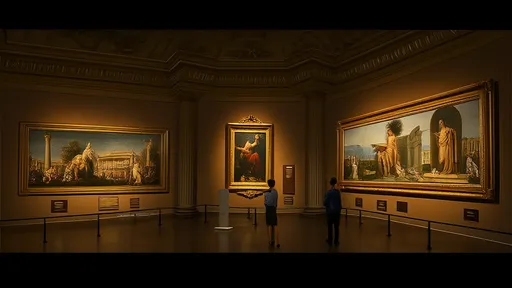
St. Petersburg, the brainchild of Tsar Peter the Great, rises from the Neva River like a phantom of European elegance. Conceived as a "window to the West," its very architecture is a masterpiece. The Baroque grandeur of the Winter Palace, now the heart of the State Hermitage Museum, and the classical lines of the Russian Museum speak of an imperial ambition to collect and showcase the finest art of the age. Walking through the halls of the Hermitage is to take a journey through Western art history, with unparalleled collections of Rembrandt, da Vinci, and Matisse, all housed within a palace that is itself a work of art. The city’s spirit is one of ordered beauty and romantic melancholy, a quality immortalized in the works of Pushkin and Dostoevsky, who wandered its canals and broad prospects.
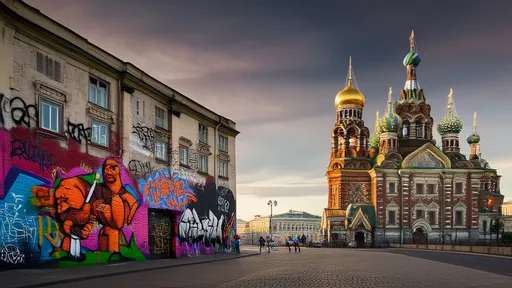
Yet, St. Petersburg’s contribution is far from being a mere repository of European classics. It was the cradle of the Russian avant-garde. Here, in the early 20th century, artists like Kazimir Malevich pioneered Suprematism, reducing art to its pure geometric form with his iconic Black Square. The city vibrated with radical energy, giving birth to movements that sought to break entirely from the past and forge a new artistic language for a new world. This spirit of revolutionary innovation continues today. The street art scene is particularly vital, with formerly industrial areas and courtyards transformed into vibrant galleries of contemporary expression, ensuring the city’s dialogue with modernism is far from over.
In stark contrast lies Moscow, the ancient and ever-beating heart of Russia. If St. Petersburg is the intellectual dream, Moscow is the passionate reality. Its skyline, a mix of onion-domed churches, Stalinist skyscrapers, and modern glass towers, tells a story of resilience and constant transformation. The epicenter of its classical art world is the Tretyakov Gallery. Where the Hermitage is encyclopedic and global, the Tretyakov is deeply, profoundly Russian. Its halls trace the entire evolution of Russian art, from the haunting spiritual icons of Andrei Rublev to the powerful, emotional canvases of the Peredvizhniki (The Wanderers), who brought art to the people and tackled pressing social themes.
Moscow does not simply preserve history; it consumes and reinvents it. This is the city of Constructivism, where architecture itself became a revolutionary statement. The works of Melnikov and Tatlin were not just buildings; they were manifestos for a new society. Today, that energy is channeled into one of Europe’s most thrilling contemporary art scenes. Garage Museum of Contemporary Art, founded by Dasha Zhukova and Roman Abramovich, is housed in a brilliantly renovated Soviet-era restaurant in Gorky Park. It is a powerhouse of cutting-edge exhibitions, educational programs, and architectural innovation, symbolizing Moscow’s relentless forward momentum. The Winzavod Center, a converted wine factory, is another hub, its brick walls now home to leading galleries, studios, and workshops, pulsating with the creative energy of a new generation.
The relationship between these two cultural capitals is not one of simple rivalry but of a fertile and ongoing conversation. Throughout history, artists, composers, and writers have moved between them, drawing inspiration from their contrasting energies. Tchaikovsky’s symphonies carry the grandeur of St. Petersburg and the deep soul of Moscow. The Ballets Russes, under Diaghilev, took the essence of Russian artistry—forged in both cities—and exploded it onto the Parisian stage, forever changing Western performance art. This exchange continues. Major exhibitions often travel between the Tretyakov and the Russian Museum, while festivals and biennials draw artists and curators from both cities into collaboration, creating a national discourse that is richer for its duality.
For the cultural tourist, this duality offers an unparalleled experience. A journey might begin in St. Petersburg, amidst the gilded splendor of the Hermitage and the mystical beauty of the Church of the Savior on Spilled Blood. One can then board the high-speed Sapsan train and, in just a few hours, find themselves in the midst of Moscow’s vibrant chaos, exploring the minimalist galleries of Winzavod before standing in quiet contemplation before Rublev’s Trinity in the Tretyakov. It is a journey through time and aesthetic, from the ordered European classicism of the 18th century to the disruptive digital art of the 21st.
Ultimately, the Russian art scene is a symphony played on two magnificent instruments. St. Petersburg, with its imperial collections and avant-garde legacy, offers a deep, nuanced connection to European art history and radical thought. Moscow, with its intense Russian soul and embrace of the new, provides a powerful narrative of national identity and contemporary transformation. Together, they form a complete picture, a dynamic and ever-evolving artistic feast that promises to inspire, challenge, and captivate visitors for generations to come. To understand Russian art is to listen to both voices in this magnificent, ongoing duet.

By /Sep 1, 2025
By /Sep 1, 2025
By /Sep 1, 2025

By /Sep 1, 2025
By /Sep 1, 2025

By /Sep 1, 2025

By /Sep 1, 2025
By /Sep 1, 2025
By /Sep 1, 2025
By /Sep 1, 2025
By /Sep 1, 2025

By /Sep 1, 2025
By /Sep 1, 2025
By /Sep 1, 2025
By /Sep 1, 2025
By /Sep 1, 2025
By /Sep 1, 2025
By /Sep 1, 2025
By /Sep 1, 2025
By /Sep 1, 2025