There is a quiet revolution on two wheels happening in the Netherlands, and it has been for decades. To truly understand Dutch culture, one must first understand its relationship with the bicycle. It is not merely a mode of transport; it is an integral thread woven into the very fabric of daily life, a symbol of national identity, practicality, and a certain philosophical outlook on living well.
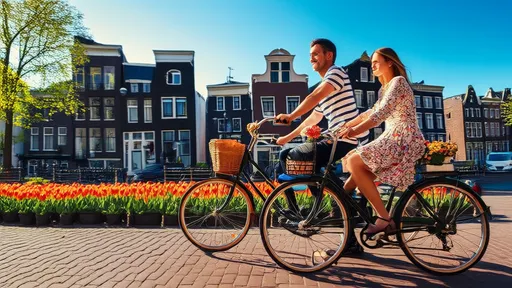
Stepping off a train at Amsterdam Centraal or Rotterdam Blaak, the first thing that strikes many visitors is the sea of bicycles. Thousands upon thousands of them, parked in multi-storey fietsenstallingen (bicycle parkings), chained to every available railing, and flowing in a continuous, orderly stream through the dedicated red asphalt paths. This is not a scene reserved for weekend enthusiasts or lyra-clad athletes. Here, everyone cycles. The elegantly dressed executive heading to a meeting, the parent ferrying two children in a bakfiets (cargo bike), the elderly couple with grocery bags dangling from their handlebars, and students laughing on their way to university. The bicycle is the great social equalizer, an utterly democratic form of mobility.
The Dutch relationship with the bike is born from both geography and history. The country is famously flat, making cycling a effortless endeavor compared to many other nations. But the roots run deeper. In the 1970s, rising car ownership led to a dramatic increase in traffic fatalities, particularly among children. This sparked a powerful social movement, Stop de Kindermoord (Stop the Child Murder), which demanded safer streets. Coupled with the oil crisis of 1973, which highlighted the vulnerability of car-dependent societies, this public pressure forced the government to radically rethink urban planning. Cities were redesigned not around cars, but around people and bicycles. This deliberate, decades-long investment in infrastructure is the unseen backbone of the cycling culture seen today.
This infrastructure is what allows the Dutch to cycle with such innate confidence. It is a comprehensive, interconnected network that feels utterly safe. Dedicated cycle paths are physically separated from fast-moving traffic by curbs, grass verges, or rows of parking. They are smooth, wide, and clearly signposted. At complex junctions, cyclists have their own traffic lights and often priority over turning vehicles. Roundabouts are designed with a ring for bicycles, ensuring a clear and safe flow. This separation is key; it means a parent doesn't think twice about taking a young child on a bike, and an elderly person can ride without fear. The system is designed for safety and efficiency, from the smallest village to the busiest city center.
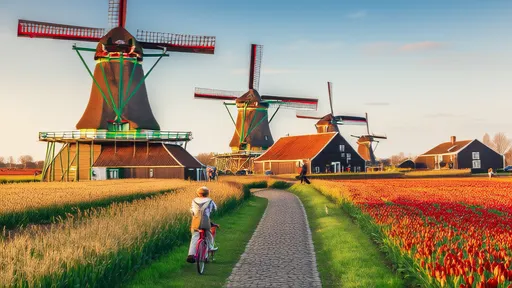
To ride a bike in the Netherlands is to experience a unique sense of freedom and connection to your surroundings. Unlike being sealed inside a car, you are part of the environment. You feel the sun on your skin, smell the bread from a bakery, overhear snippets of conversation, and notice the small changes in your neighborhood. It is an active, engaging way to travel that seamlessly integrates exercise into the daily routine. The commute to work becomes a workout, a trip to the supermarket becomes a chance for some fresh air. This constant, low-impact physical activity is undoubtedly a contributing factor to the Dutch reputation for good health and tall stature.
Beyond the individual benefits, the bicycle is a powerful social glue. It facilitates countless small, everyday interactions. Biking side-by-side with a friend is a prime opportunity for a long chat. You stop briefly at a traffic light and exchange a nod with a fellow cyclist. The shared experience of battling a particularly strong headwind creates a silent camaraderie. The bike also promotes independence in children from a remarkably young age. It is common to see groups of eight- or nine-year-olds cycling together to school or to a friend's house, something increasingly rare in many other countries where parents chauffeur children by car. This early autonomy is a cherished part of Dutch childhood.
The practicalities of Dutch cycling are a world away from the high-tech, gear-obsessed culture found elsewhere. The typical Dutch bike, an omafiets ("grandma bike") or opafiets ("grandpa bike"), is a study in rugged simplicity. They are heavy, upright, and built to last. Features include a step-through frame for easy mounting (essential when wearing a dress or suit), fully enclosed chain guards to protect clothing, sturdy rear carriers for passengers or packages, and almost always, a kickstand and a loud, bell. They are painted in muted, practical colours – black, dark green, navy blue. These are not bikes for breaking speed records; they are workhorses designed for comfort, utility, and reliability in all weather. The cycling style matches the machine: calm, steady, and predictable. There is no weaving or aggressive maneuvering; the flow of cycle traffic is a model of collective efficiency.
This cycling ethos extends to every facet of life. The iconic bakfiets, a long cargo bike with a large wooden or plastic box on the front, has become the modern-day family minivan. It is used for the school run, grocery shopping, transporting pets, and even moving small pieces of furniture. Businesses utilize cargo bikes for deliveries, reducing congestion and emissions in city centers. The bicycle is also deeply integrated with the public transport system. Nearly every train station has a massive, often guarded, bicycle parking facility, allowing for a seamless "bike-train-bike" commute that efficiently covers longer distances. This intermodality makes the entire country accessible without needing a car.
Adopting the local cycling lifestyle as a visitor or new resident is one of the fastest ways to feel at home. Renting a sturdy omafiets for a week is a transformative experience. You learn the unspoken rules: use your bell sparingly but clearly, signal your turns with a straight arm, always lock your bike (with two locks, ideally), and never, ever stop in the middle of the path to check your phone. You become attuned to the rhythm of the city in a new way. You discover shortcuts through beautiful parks, find hidden cafes you would have missed from a tram window, and start to gauge distances not in kilometers, but in a pleasant ten-minute ride.
Ultimately, the bicycle in the Netherlands is more than just a convenient tool. It represents a conscious choice for a livable, sustainable, and human-scale urban environment. It fosters health, independence, and social connection. It is a silent protest against noise, pollution, and the isolation of the automobile. To cycle here is to participate in a collective project, a daily reaffirmation of a society that has chosen to prioritize the well-being of its people over the convenience of the car. It is a way of life that is profoundly simple yet incredibly rich, offering a powerful blueprint for how the world might move forward, one pedal stroke at a time.
By /Sep 1, 2025
By /Sep 1, 2025
By /Sep 1, 2025
By /Sep 1, 2025
By /Sep 1, 2025

By /Sep 1, 2025

By /Sep 1, 2025
By /Sep 1, 2025
By /Sep 1, 2025
By /Sep 1, 2025
By /Sep 1, 2025

By /Sep 1, 2025
By /Sep 1, 2025
By /Sep 1, 2025

By /Sep 1, 2025

By /Sep 1, 2025
By /Sep 1, 2025
By /Sep 1, 2025
By /Sep 1, 2025
By /Sep 1, 2025