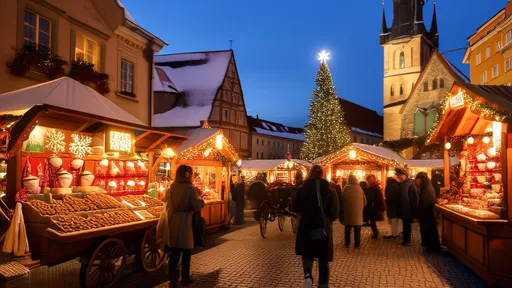
As autumn leaves surrender to the first frost, a magical transformation sweeps across Europe's town squares and historic centers. The air begins to carry the unmistakable scent of mulled wine and roasted almonds, while the distant sound of carols signals the arrival of a cherished continental tradition—the Christmas market. For centuries, these festive gatherings have served as the beating heart of seasonal celebration, offering locals and travelers alike a genuine taste of holiday spirit steeped in history and warmth.
Venturing into Germany, the undeniable birthplace of the Christkindlesmarkt, one finds themselves walking into a living storybook. Nuremberg's market, established in the 1600s, is perhaps the most famous of them all. Here, a profound sense of ceremony marks the opening, often with a local child dressed as the Christkind, or "Christ Child," reciting a prologue from the balcony of the Church of Our Lady. The entire market is a vision of rustic charm, with over two hundred red-and-white striped booths selling handcrafted ornaments, intricate Zwetschgenmännle (figures made from dried prunes), and the famous Nuremberg Rostbratwurst, small sausages seasoned with marjoram and grilled over open fires. The atmosphere is one of pure, unadulterated tradition, a direct link to the past that feels both grand and intimately cozy.
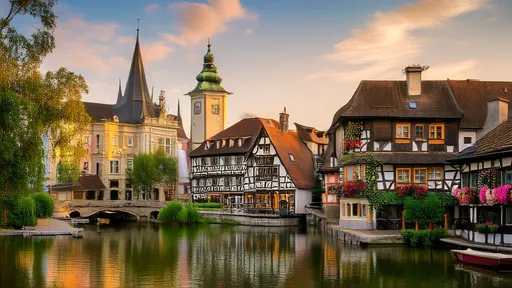
Traveling west into the Alsace region of France, the markets in Strasbourg claim the lofty title of "Capital of Christmas." The entire city center transforms into a sprawling Christkindelsmärik, a tradition dating back to 1570. The scent of bredele—delicate, spiced Christmas biscuits—mingles with the aroma of hot wine. The towering Great Christmas Tree in Place Kléber is a spectacular sight, but the true magic lies in the smaller squares like Place du Marché aux Poissons, where artisans demonstrate centuries-old crafts. The blend of French joie de vivre and Germanic gemütlichkeit creates a festive ambiance that is uniquely Alsatian, felt in every shared smile and every chorus of "Mon Beau Sapin."
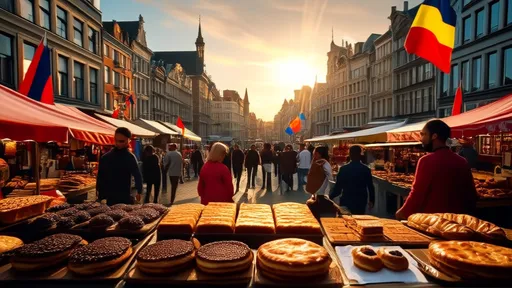
A journey north leads to the stunning medieval squares of Belgium and the Netherlands. Brussels' Winter Wonders event is less a single market and more a magnificent festive district encompassing the Grand-Place. The Gothic architecture of the town hall, illuminated by a spectacular sound-and-light show, provides a breathtaking backdrop for ice skating and browsing stalls laden with handmade lace and artisanal chocolates. Meanwhile, in Amsterdam, the ice rink at the Museumplein, set between the Rijksmuseum and the Van Gogh Museum, offers a uniquely cultural twist. The mood here is lively and artistic, a celebration of light and creativity during the darkest time of the year.
No tour of traditional markets would be complete without a stop in Austria, where the atmosphere turns decidedly musical. Vienna’s Christmas market in front of the magnificent City Hall is a scene from a classical painting. The backdrop of neo-Gothic spires is complemented by the melodies of a live brass band or a choir singing "Stille Nacht" (Silent Night). The air is thick with the scent of Punsch and chestnuts. The Viennese focus on quality and aesthetics is evident in the goods for sale: delicate glass baubles, hand-dipped beeswax candles, and elaborate nativity scenes. It is a more refined, elegant affair, yet it retains a deep, heartfelt warmth.
Venturing into the alpine regions, the markets of Switzerland offer a truly sublime experience. Against a backdrop of snow-capped peaks, the market in Montreux, nestled along the shores of Lake Geneva, is a vision of serenity. The chalet-style wooden huts sell local specialties like cheese raclette and vin chaud, while the sound of cowbells seems to echo the season's peace. In Zurich, the market inside the main railway station boasts one of Europe’s largest indoor Christmas trees, adorned with thousands of Swarovski crystals. The Swiss markets masterfully blend breathtaking natural beauty with precision and luxury.
Further east, the Christmas markets of Prague and Budapest tell a story of resilience and renewed joy. Prague's Old Town Square, with its ancient astronomical clock and the Gothic Týn Church, provides a fairy-tale setting. The smell of trdelník (a sweet pastry rolled in sugar and nuts) and svařák (mulled wine) fills the crisp air. Across the border in Hungary, Budapest’s Vorosmarty Square market is a feast for the senses, centered around the traditional kürtőskalács (chimney cake) and vibrant displays of handmade embroidery and pottery. The festive spirit here feels earned and deeply cherished, a bright light in the winter darkness.
What truly defines these markets, beyond the crafts and the cuisine, is the intangible feeling they cultivate. It is the feeling of community—of strangers sharing a bench and a warm drink, of children’s wide-eyed wonder at the glittering decorations, of the collective pause from modern life’s frantic pace. It is the warmth that comes not just from the Glühwein but from human connection. In an increasingly digital and disconnected world, these markets remain bastions of tangible tradition and shared joy. They are not merely places to shop; they are destinations to experience, to feel, and to remember. They are, in every sense, where the heart of a European Christmas beats the strongest.
By /Sep 1, 2025
By /Sep 1, 2025
By /Sep 1, 2025
By /Sep 1, 2025
By /Sep 1, 2025

By /Sep 1, 2025

By /Sep 1, 2025
By /Sep 1, 2025
By /Sep 1, 2025
By /Sep 1, 2025
By /Sep 1, 2025

By /Sep 1, 2025
By /Sep 1, 2025
By /Sep 1, 2025
By /Sep 1, 2025
By /Sep 1, 2025
By /Sep 1, 2025
By /Sep 1, 2025
By /Sep 1, 2025
By /Sep 1, 2025