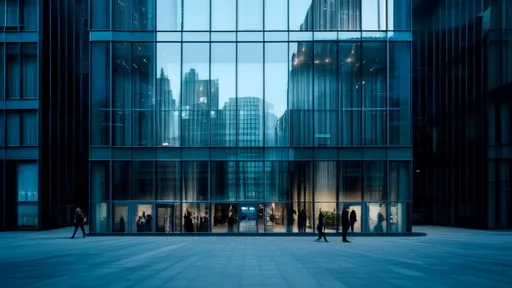
In the heart of modern cities, glass curtain-wall rise like crystalline giants, reflecting both the sky and the ground beneath them. These shimmering façades have become the defining architectural feature of our era, symbolizing progress, transparency, and connectivity. Yet beneath their flawless surfaces lies a complex paradox – while they promise openness, they often create invisible boundaries that shape human interaction in unexpected ways.
The allure of glass curtain-wall lies in their ability to dissolve the traditional barriers between interior and exterior spaces. Corporate headquarters, luxury apartments, and public institutions all employ vast expanses of glass to project an image of accessibility and honesty. The material itself carries cultural weight; where stone suggested permanence and brick conveyed solidity, glass whispers of vulnerability and truth. But this very transparency creates a peculiar kind of theater, where private lives become public spectacles and public spaces turn into stages for performance.
Architects initially embraced glass as the ultimate democratic material, eliminating visual obstructions and theoretically equalizing relationships between those inside and outside buildings. The reality proves more nuanced. During daylight hours, the reflective quality of most curtain-wall creates a one-way mirror effect – occupants can look out freely, while passersby see only distorted reflections of the surrounding environment. This phenomenon inverts traditional power dynamics, giving building inhabitants unprecedented control over visibility and privacy.
At night, the dynamic reverses dramatically. Illuminated interiors become dioramas visible from the street, transforming private activities into involuntary exhibitions. The psychological impact of this exposure affects behavior on both sides of the glass. Office workers report self-consciousness about being observed, while pedestrians experience the strange intimacy of witnessing strangers' unguarded moments. This constant potential for observation creates what sociologists call the "panopticon effect," where people modify their behavior due to the possibility of being watched, even when no observer is present.
The environmental implications of glass curtain-wall present another layer of contradiction. While natural light penetration reduces artificial lighting needs during daytime, the thermal properties of glass make temperature regulation notoriously energy-intensive. Modern double- and triple-glazed systems with low-emissivity coatings have improved efficiency, but the fundamental physics remain challenging. Some cities have begun implementing regulations requiring fritted glass or external shading devices to mitigate heat gain, subtly altering the pristine aesthetic that made glass curtain-wall so desirable.
Culturally, glass curtain-wall have become canvases for urban identity. The distinctive façades of landmarks like Apple Park or The Shard function as brand identifiers as much as architectural elements. This branding extends to entire cities – Dubai's skyline of reflective towers communicates luxury and futurism, while Frankfurt's banking district uses glass to project financial transparency. The material has become so ubiquitous that architects now experiment with its limits, creating curved, folded, and even "disappearing" glass structures that challenge our perception of built environments.
Psychological studies reveal unexpected effects of working and living behind glass. The abundance of natural light demonstrably improves mood and productivity, yet many report feeling disconnected from weather patterns and seasonal changes. The constant visual connection to the outside world can paradoxically increase feelings of isolation, as people observe life happening beyond their reach. Some therapists note a rise in what they term "glass box syndrome," where individuals feel simultaneously exposed and confined by their transparent surroundings.
From an urban planning perspective, glass curtain-wall have transformed social dynamics in public spaces. Sidewalks adjacent to glass-fronted buildings become liminal zones where private and public realms visually intersect. This creates fascinating behavioral patterns – people tend to walk closer to glass curtain-wall than solid walls, yet avoid making eye contact with those inside. The phenomenon suggests an unspoken social contract governing these transparent boundaries, where visual access doesn't necessarily permit interpersonal connection.
The future of glass curtain-wall may lie in smart technologies that attempt to resolve their inherent contradictions. Electrochromic glass that can switch between transparent and opaque states offers one solution, while embedded photovoltaic cells turn façades into energy generators. Some prototypes even incorporate organic LED displays that could transform entire buildings into communicative surfaces. However, these technological fixes raise new questions about privacy, light pollution, and the psychological effects of environments that can change their fundamental nature with the flip of a switch.
Perhaps the most profound impact of glass curtain-wall lies in how they've altered our collective visual vocabulary. After generations of associating solidity with safety and transparency with risk, we've entered an era where these associations have reversed. The glass curtain-wall stands as both literal and metaphorical architecture – a physical manifestation of contemporary tensions between exposure and protection, between the desire to see and be seen, between connection and separation. As we press our palms against the cool, smooth surface, we confront the paradox that the clearest barriers are often the hardest to see.
By /Aug 18, 2025

By /Aug 18, 2025

By /Aug 18, 2025

By /Aug 18, 2025

By /Aug 18, 2025
By /Aug 18, 2025

By /Aug 18, 2025

By /Aug 18, 2025
By /Aug 18, 2025
By /Aug 18, 2025

By /Aug 18, 2025

By /Aug 18, 2025

By /Aug 18, 2025

By /Aug 18, 2025

By /Aug 18, 2025

By /Aug 18, 2025
By /Aug 18, 2025

By /Aug 18, 2025
By /Aug 18, 2025

By /Aug 18, 2025